
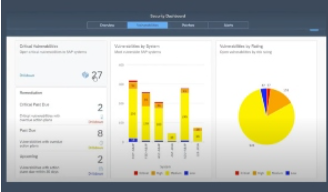
The Cybersecurity Extension for SAP provides industry-leading protection for SAP systems against cyber threats. The SAP-certified addon includes more than 5000 automated vulnerability checks, 300 custom code checks, and 1200 threat detection patterns to protect SAP solutions. It also supports automated compliance audits for 15+ security frameworks.

Back to Vendor Directory

















Layer Seven Security
Layer Seven Security is a leading provider of cybersecurity solutions and services for SAP systems. The SAP-certified Cybersecurity Extension for SAP is used by organizations worldwide to secure SAP systems from cyber threats. The solution automates vulnerability management, custom code security, and threat detection to protect SAP systems against fraud, espionage and sabotage. The Cybersecurity Extension for SAP also automates compliance audits for mandatory security requirements in SAP RISE / Cloud ERP.
Featured Solutions
Layer Seven Security is an approved SAP Services Partner and trusted leader in securing digital transformations. We support S/4HANA migrations and SAP RISE / Cloud ERP deployments through specialized services including SAP penetration testing, API reviews, access risk analysis, vulnerability analysis, compliance audits, and custom code security assessments.
SAP RISE / Cloud ERP customers must comply with mandatory requirements for security hardening defined by SAP Enterprise Cloud Services (ECS). The Cybersecurity Extension for SAP simplifies compliance by automating audits and gap assessments for SAP solutions to align with SAP requirements.
Featured Content
Review comparison of leading SAP cybersecurity solutions and choose with confidence. Select the right cybersecurity solution for your SAP systems based on 20 specific criteria.
Explore the shared responsibility model for security in SAP RISE / Cloud ERP. While SAP secure the underlying infrastructure, customers retain responsibility for application security.
Multimedia Center
Layer Seven is an industry leader for SAP cybersecurity. Get to know to us with this short introductory video.
Take a 2-minute tour of the Cybersecurity Extension for SAP to discover how you can secure your SAP systems from cyber attac.
Articles / Case Studies / Videos
SAP OVERPASS Update: New Attack Route and Public Exploit Code Raise Patching StakesResearchers have found a new route to the SAP OVERPASS vulnerability through WebSocket-based RFC, and proof-of-concept exploit code has surfaced in a public SAP toolkit. SAP teams need to know which communication paths still reach vulnerable systems while patches are deployed.
Sep 25, 2026
Beyond Detection: Managing Access Risk in SAP S/4HANASAP S/4HANA access risk can become difficult to interpret as permissions accumulate across roles, applications, services, and authorizations. Layer Seven Security explains how organizations can move beyond detecting excessive access and Segregation of Duties conflicts by adding root-cause analysis, remediation guidance, and auditable exception management.
Sep 2, 2026
SAP September Patch Day Exposes the Cost of Poor Architecture VisibilitySAP September Patch Day 2026 brings four Critical vulnerabilities across infrastructure, cloud applications, and client environments. The release shows why architecture and dependency visibility increasingly determine how quickly SAP security teams can identify exposure and complete remediation.
Sep 9, 2026
The Cyber Defense Window Is Closing. Here Is What That Means for SAPAI is lowering the cost and expertise required to exploit existing SAP weaknesses while creating new risks around business authority and agent identities. Security experts say SAP customers need faster, more continuous defenses as AI-enabled attacks accelerate.
Sep 1, 2026



SAP Security Patch Day July 2026: Year’s Largest Critical and High Priority WorkloadSAP Security Patch Day July 2026 delivered the year’s largest combined workload of critical and high-priority entries. Layer Seven, Pathlock, and SecurityBridge explain the attack paths, remediation order, and operational barriers SAP teams must address across hybrid landscapes.
Jul 15, 2026
How to Turn SAP Logs into SOC-Ready Intelligence in SplunkSAP logs can give SOC teams critical visibility into user activity, privilege changes, configuration changes, and business process risk. Layer Seven Security’s Cybersecurity Extension for SAP prepares SAP security events before they reach Splunk, helping analysts work with structured findings instead of raw log data.
May 28, 2026
SAP Security Patch Day May 2026 Shows Risk Beyond Core ApplicationsSAP Security Patch Day May 2026 shows why SAP teams need to look beyond core applications and severity scores. Critical vulnerabilities affected SAP S/4HANA and SAP Commerce Cloud, while Mini Shai-Hulud brought developer tooling, credentials, and supply-chain exposure into the SAP security conversation.
May 14, 2026


Layer Seven Security Brings SAP Cybersecurity Extension to BTP as Clean Core Strategy ExpandsLayer Seven Security has added SAP BTP deployment for its Cybersecurity Extension, aligning SAP security delivery with clean core architecture, SAP Fiori user experience, and platform-based extension models.
Apr 30, 2026
Securing the Core: Navigating the Shared Responsibility Model in SAP Cloud ERP PrivateAs more organizations migrate to SAP Cloud ERP Private, a critical security gap is emerging: up to a third of active users are not rigorously following the Shared Responsibility Model, and 30% of those in the exploration phase don't know it exists. Here's what every SAP organization needs to know and do before it's too late.
Apr 22, 2026

Layer Seven Security Announces Cybersecurity Extension for SAP Version 2.0 with Major Advancements in Threat Detection and ComplianceLayer Seven Security's upcoming Version 2.0 of the Cybersecurity Extension for SAP enhances threat detection and compliance for SAP NetWeaver, S/4HANA, and Cloud ERP environments, adding support for Java applications, advanced anomaly detection, an expanded library of threats, and alignment with latest SAP security standards.
Dec 15, 2025
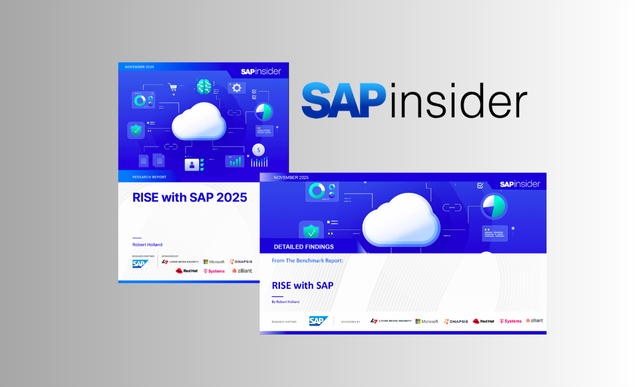
SAPinsider Benchmark Research – RISE with SAP 2025As 2025 ends, the narrative around SAP migration has shifted from “why move?” to “how fast?”
This SAPinsider report, based on a survey of 122 community members conducted in late 2025, highlights a marked acceleration in cloud ERP adoption as the 2027 end-of-maintenance deadline approaches.
Now commercially referred to as SAP Cloud ERP Private, the RISE with SAP package is seeing varied adoption rates; smaller organizations (under $2 billion in revenue) are currently twice as likely to be live on the solution compared to larger enterprises, which are predominantly in the planning or exploration phases.
While SAP’s dedicated transition support and license conversion credits are the primary drivers for migration, cost and unclear business value remain significant barriers for holdouts. The report also identifies a growing influence of Generative AI on ERP strategy. However, it warns of critical gaps in security compliance and an impending shortage of skilled implementation resources.
Download the benchmark report to read the full data analysis and receive recommendations for your own plans.
- Understand why there is a concerning lack of security awareness
- Why we forecast that implementation partners will struggle to staff the volume of concurrent projects required to meet the 2027 and 2030 deadlines.
- How SAP’s direct support and financial incentives are driving adoption rates
Nov 26, 2025






Practical Workarounds for SAP Security Notes When Patching Isn’t an OptionOrganizations face challenges in applying SAP security patches due to compliance demands and operational constraints, necessitating strategic workarounds such as network filtering and role management to mitigate vulnerabilities while maintaining system stability.
Oct 24, 2025
Layer Seven Security’s Cybersecurity Extension for SAP Named Top Protection Solution for 2025 Layer Seven Security has been recognized as the top provider of SAP cybersecurity solutions for 2025 due to its Cybersecurity Extension, which offers comprehensive coverage, ease of deployment, and transparent pricing.
Sep 16, 2025
Layer Seven Launches New Edition of Cybersecurity Extension for SAPLayer Seven Security has launched the Cybersecurity Extension for SAP, NetWeaver Edition, enabling organizations to secure their SAP environments without reliance on aging Application Lifecycle Management platforms like SAP Solution Manager.
Aug 26, 2025
Securing SAP systems is becoming more complex; it could be time to upgrade protection measuresAs SAP architecture becomes more complex due to increased automation and varied tech stacks, Layer Seven Security's Cybersecurity Extension offers adaptable, SAP-certified protection for securing vulnerabilities in both on-premise and cloud-based systems.
Sep 20, 2024
SAPinsider Buyers Guide: CybersecurityCyberattacks and cybercrime continue to increase in frequency. In SAPinsider’s 2022 Benchmark Report on Cloud Security Trends for SAP Customers, nearly two thirds of respondents indicated their organization had experienced an incident targeting one of their cloud service providers. While these attacks may not always directly affect SAP systems, in an environment of increased digital risk, securing data in SAP systems stands out as a critical focus for many businesses. Highlighting this concern, SAPinsider’s 2023 Cybersecurity Threats to SAP Systems report identified ransomware attacks, vulnerabilities due to unpatched systems, and compromised credentials as the primary threats to SAP systems. In the broader context of cybersecurity, data protection within SAP systems is of utmost concern.
This emphasis is reasonable considering the critical data housed in these systems that form the core assets of a company, covering essential elements like partner and customer information, financial documents, transaction records, banking connections, and even personal identifiable information of employees. Considering the immense value of this data, it is logical why data protection is prioritized over other cybersecurity areas. For example, SAPinsider’s SAP Cybersecurity Priorities research report reveals that 58% of respondents from larger organizations and 54% from smaller ones ranked data protection as their foremost cybersecurity concern, highlighting its universal importance across various business scales. Aligning with these priorities, 53% of respondents identified the protection of sensitive and confidential SAP data as the primary driver of their cybersecurity strategies.
To help SAP users in their cybersecurity decisions, SAPinsider put together this Buyers Guide, which aims to explore the challenges, opportunities, and trends in the cybersecurity space and to highlight key vendors and partners operating in the domain. The vendor capability assessments are intended to aid and assist organizations in selecting the vendors offering technology and consulting services for cybersecurity including capabilities around threat intelligence and detection, access and identity management, data protection and encryption, vulnerability management, incident response and forensics, cloud security and compliance, and secure code and application review.
Dec 31, 2023
SIEM INTEGRATION FOR SAP©Security Information and Event Management (SIEM) platforms combine the ability to
collect log data from applications, hosts, routers, switches, firewalls and other endpoints
with the ability to analyze events to support threat detection, event correlation and
incident response.
Jul 18, 2024
Security for SAP RISEThis document compares security solutions and services available from SAP against the capabilities of the Cybersecurity Extension for SAP (CES). CES is a sofware addon for SAP solutions and certified for SAP S/4HANA. It is available as a cloud subscription. CES delivers more coverage at lower cost than the equivalent RISE solutions and services and provides a unified alternative to multiple SAP RISE offerings.
Jul 11, 2024





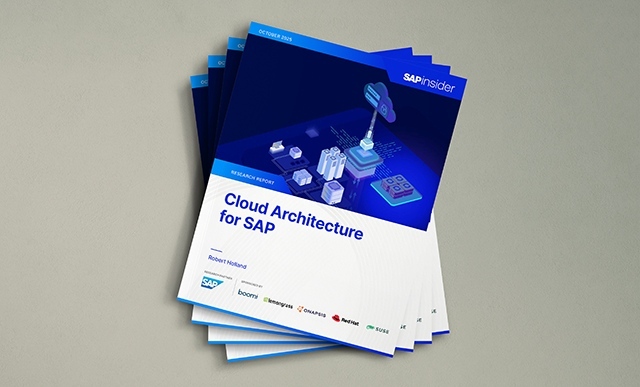
Cloud Architecture for SAPSAPinsiders have been moving to the cloud for over a decade but the transformation process is far from complete. In addition, most organizations take a unique path to the cloud. Some started with a lift and shift of older on-premise systems to infrastructure-as-a-service environments, while others may have directly moved to SAP S/4HANA or even RISE with SAP/SAP Cloud ERP Private. Some started their remediation processes for data and code early, while others have done it following the move to SAP S/4HANA, or even after the move to RISE with SAP. What this has made clear is that, while establishing and maintaining cloud architecture for SAP is on nearly everyone’s roadmap, most organizations are still in the middle of that transition.
What is clear from this data is that leaders have generally made more progress in their adoption of cloud technologies than either cloud beginners or the hybrid majority. However, that is not true in every instance. For example, more than two thirds (69%) of leaders are already using SAP Business Technology Platform (BTP), but this is only slightly more than the hybrid majority (60%) or cloud beginners (57%). This difference is more marked with the adoption of SAP S/4HANA Cloud which is being used by 62% of leaders, 51% of the hybrid majority, and only 23% of cloud beginners.
This year's research also explored the cloud or hybrid cloud platforms actively in use in SAP environments, the top priorities for evolving SAP architecture over the next 12-24 months, the impact of adopting cloud or hybrid cloud architecture in transforming SAP workloads, and the challenges encountered when adopting cloud or hybrid cloud architectures for SAP workloads.
The findings indicate that SAPinsiders will not be able to continue to run legacy applications forever. And with the end of 2027 just over two years away, that change will likely come first with the need to move to SAP S/4HANA Cloud through the auspices of a RISE with SAP/SAP Cloud ERP Private contract. SAPinsiders must be prepared for this change, and should follow the guidance of cloud leaders in making this possible.
Download the benchmark report to read the full data analysis and receive recommendations for your own plans.
- Understand the benefits experienced from adopting cloud or hybrid cloud architecture for SAP or SAP-adjacent systems.
- Explore the impact of adopting cloud or hybrid cloud architecture in transforming SAP landscapes.
- Learn about the factors impacting cloud or hybrid cloud architecture strategy for SAP workloads.
- See what SAPinsiders need to do to be successful in their cloud transformations.
Oct 31, 2025

Your request has been successfully sent